Your Google Business Profile Is Not a Set-It-and-Forget-It Tool in 2026
You set up your Google Business Profile a while back. You filled in your address, picked your business category, maybe collected a handful of reviews, and moved on. That made sense at the time — because that’s genuinely all it took.
But a lot has changed recently with Google, and a lot of local business owners haven’t caught up yet.
If you haven’t touched your profile in months, you’re likely losing ground to competitors who figured out that Google changed a lot of the rules. Your profile used to be a general directory type of public listing. Now it’s a live signal — and Google is paying close attention to whether yours looks active or abandoned.
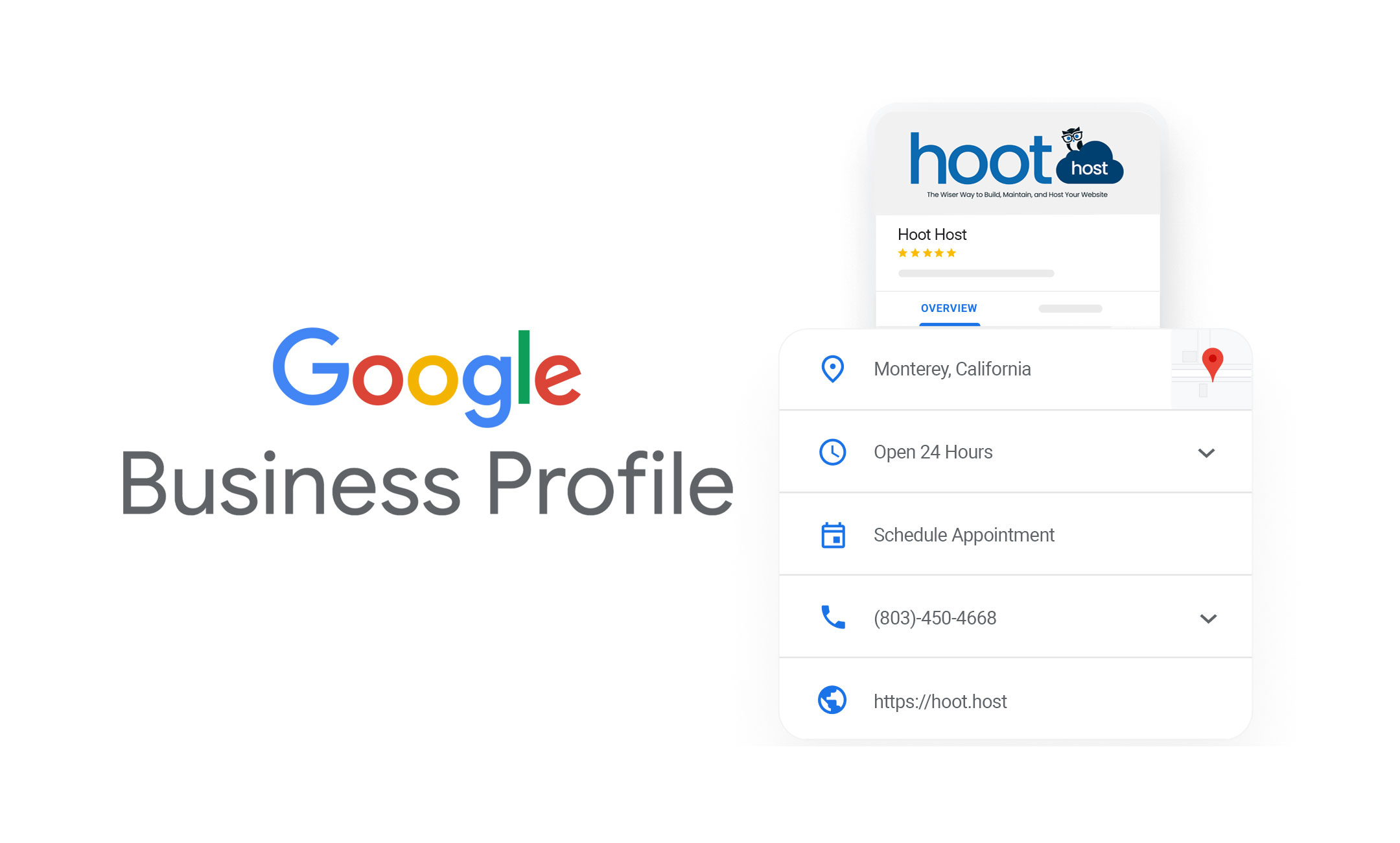
The Old Rules Don’t Cut It Anymore
The basics still matter. Your business category, your name, your address — these are still foundational. Your primary GBP category and location is still the top factors for showing up in the local map pack.
But here’s the problem: every serious competitor in your area has those basics covered too. When everyone has a complete profile with accurate info and decent reviews, the basics stop being a differentiator. They’re just the price of admission.
What’s actually separating the businesses in the top 3 of the map pack from the ones buried underneath them is engagement. Posts. Fresh photos. Recent reviews. Active Q&A. Google wants to see that your business is alive and open for customers — and it rewards the ones that prove it consistently.
Your Hours Are a Ranking Signal (Yes, Really)
This one catches people off guard. According to recent research, being listed as open when someone searches for you is now the fifth most important factor for local map pack rankings.
Your hours aren’t just there to inform customers. They’re data that Google actively uses when deciding who to show. If your profile shows you as closed during a high-intent search window, you can lose rankings — even if everything else about your profile is perfect.
What to do about it: audit your hours every quarter. Make sure holiday hours are updated before the holiday, not after. And think about whether your listed hours actually match when you’re reachable — because when they don’t line up, it costs you!
Reviews: Freshness Matters More Than You Think
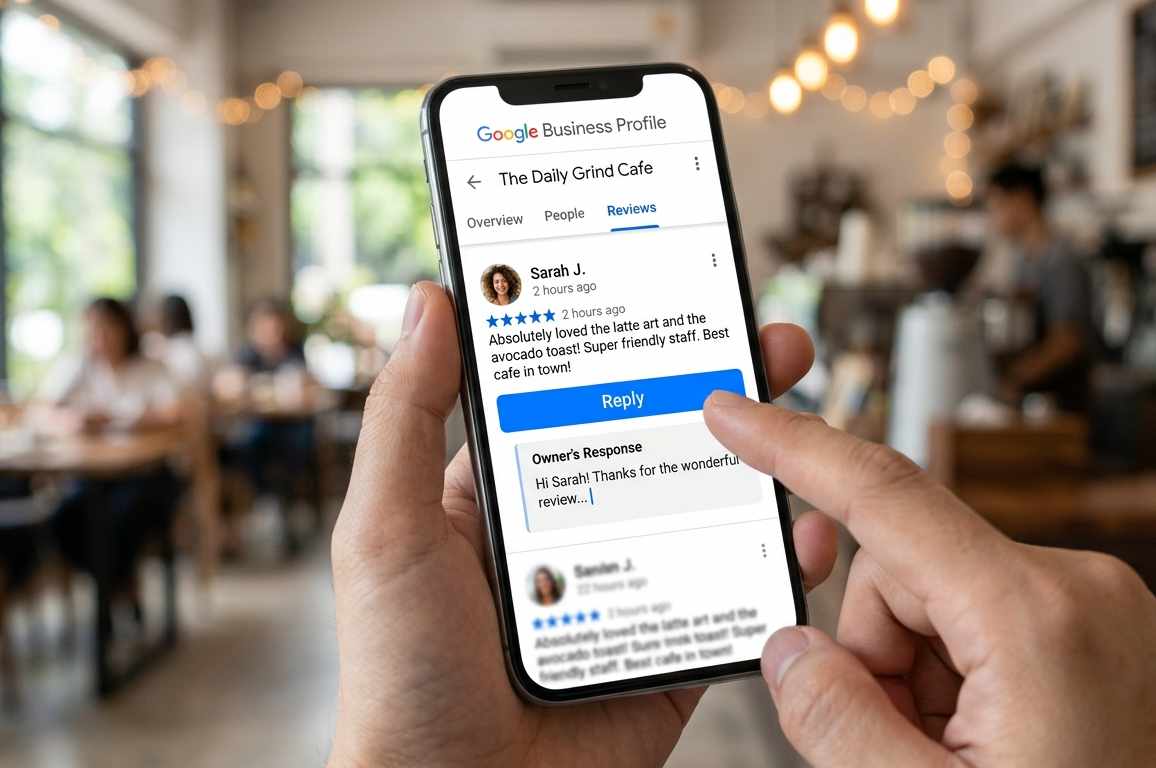
Most business owners focus on their star rating and total review count. Both matter, but there’s a third factor that often gets ignored: how recently those reviews came in.
A business that earns 12 reviews over three years and one that earns 12 reviews over three months are sending completely different signals to Google — even if the star ratings are identical. Review velocity is what Google cares about. Consistent, steady review activity tells the algorithm that your business is actively serving customers right now.
The fix is simpler than most people think. Build a review request into your normal workflow. Send the ask within 24 hours of completing a job or transaction, while the experience is still fresh. Respond to every review — positive and negative — within a day or two. Those owner responses count as engagement signals too.
What to avoid: batching your review requests once a month, or sending the same generic follow-up every time. Personalize it. Make the ask feel authentic!
GBP Posts: The Easiest Freshness Signal Most Businesses Ignore
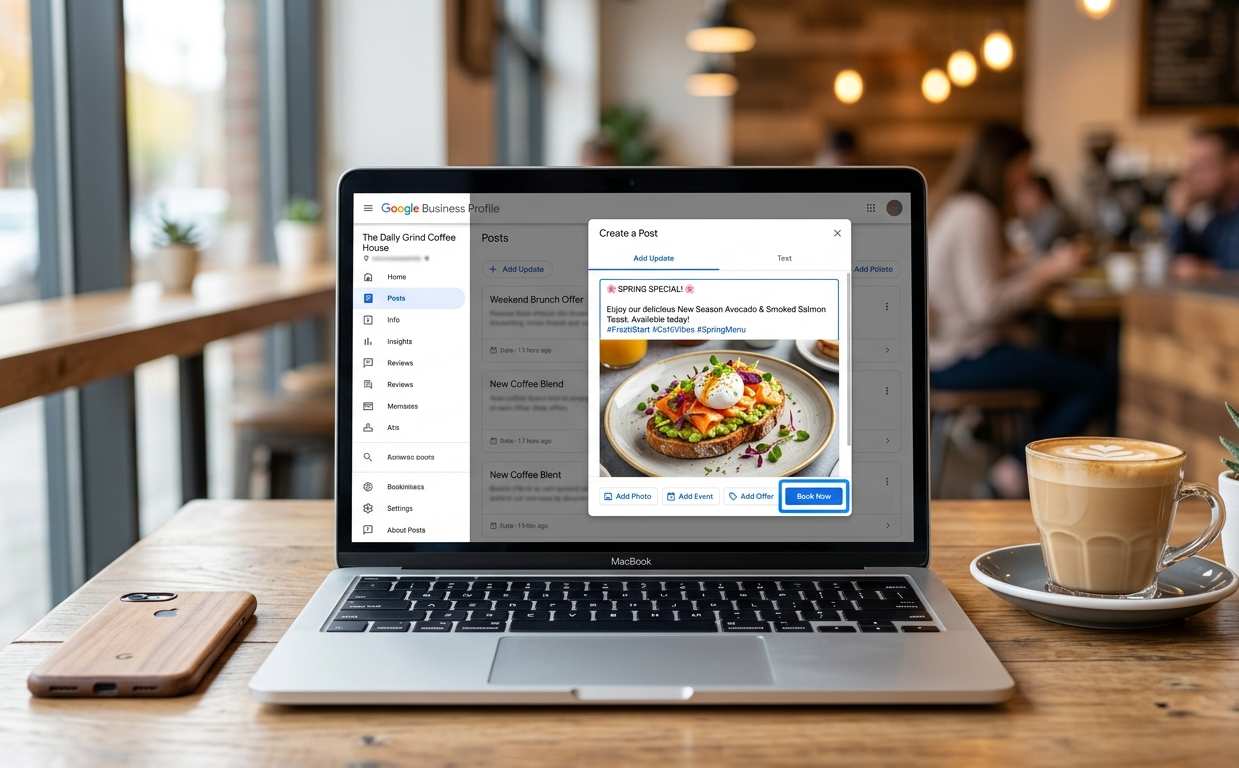
Google gives every business the ability to post updates, offers, and events directly to their profile. Yet almost nobody uses it consistently!
That’s a real missed opportunity, because posts are one of the most direct ways to signal to Google that your profile is actively managed. Every post says: someone is here, paying attention, and running a real business.
You don’t need to write essays. A quick update about a recent project, a seasonal offer, a note about a local event you’re involved in, sharing a recent blog post from your website — that’s enough. The goal is consistency, not perfection.
“In all of my educational webinar events I constantly tell business owners with a Google Business Profile to treat it like another social media platform. Use the Updates feature consistently and strategically to increase your engagement and activity on Google!” – Hoot Host Founder, Christopher Carbaugh
Aim for at least one post per week – three if you are being aggressive. Use the Offer post type when you have something time-sensitive, since it gets more visual space in your profile than a standard update. And if you find yourself thinking “I have nothing to post about,” that’s usually a sign you’re overthinking it — not that there’s nothing going on.
Photos: Stop Uploading in Batches
Here’s a pattern that’s surprisingly common: a business uploads 40 or 50 photos all at once, then doesn’t touch their profile again for a year. It feels productive. It isn’t!
What Google picks up on isn’t how many photos you have — it’s whether your profile shows recent activity. A steady trickle of new images over time sends a much stronger freshness signal than a one-time photo dump from 14 months ago.
Aim to upload new photos at least twice a month. Make them real: recent work, your team, your space as it actually looks today. For service businesses, before-and-after shots and job-site photos work especially well. They’re specific, authentic, and the kind of thing customers actually find useful when deciding who to call.
The Q&A Section Deserves Five Minutes of Your Time
The Questions & Answers section on your GBP profile (for those who have one) is easy to ignore — and easy to get wrong if you do ignore it.
Here’s the issue: anyone can answer the questions posted there, not just you. If a question sits unanswered, a random user might step in with an answer that’s incomplete or flat-out wrong. That’s not a great look, and it’s a missed chance to control the conversation.
Take 10 minutes and seed the Q&A with the three to five questions customers ask you most often. Answer them yourself, clearly and helpfully. That’s it! Then just check back occasionally to make sure nothing has changed.
This All Feeds Into AI Search Now Too
One more thing worth knowing: everything described above doesn’t just affect your traditional map pack rankings anymore. AI search results pull from the same signals — review recency, post activity, photo freshness, accurate hours, complete service descriptions.
Most AI search ranking factors are citation and entity-based signals — the same stuff we’ve been talking about in this article!
Businesses with stale profiles aren’t just slipping in the map pack. They’re becoming invisible to AI-driven search results entirely. And that gap is only going to widen.
The Compounding Effect
Here’s what makes consistent GBP management worth the effort: the signals stack over time.
Regular posts build freshness. Steady reviews build trust signals. New photos drive engagement. Higher engagement improves your rankings. Better rankings bring more views, more reviews, and more interactions — which improve your rankings further. It’s a full circle!
A profile you maintain consistently becomes genuinely hard for competitors to displace. One you set up once and forgot about slowly loses ground without you even noticing.
The businesses that understand this aren’t doing anything complicated. They’re just showing up every week with a post, asking for a review after a job is done, and uploading a photo of their work. That’s the whole strategy. The difference between them and everyone else is just that they do it consistently.
A Quick Checklist for Managing your Google Business Profile in 2026
If you’re not sure where to begin, work through this list:
- Audit your hours — Are they accurate right now? Are holidays covered?
- Post something this week — An update, an offer, anything real
- Request a review from your last customer — Do it today, while it’s fresh
- Upload two or three new photos — Real ones, not stock
- Check your Q&As or Service Descriptions — Seed them with your unique voice and expert insights
- Respond to any unanswered reviews — Especially the negative ones
None of this is complicated. It just requires making it a habit instead of an afterthought. That is our guide to managing your Google Business Profile in 2026!